August 2026
[I am currently on a social media break and in hospital. I am still posting about health and/or things I have written.]
My thoughts on (not) using AI detectors.
https://eve.gd/2026/08/31/on-not-using-ai-detectors/
There is NOTHING in here about digital preservation. Crossref seems to care little about this, despite it being the ONLY bedrock of their claim to "persistence".
https://www.crossref.org/blog/share-your-feedback-on-the-new-crossref-member-practices/
Oh, and "We are still unable to get involved in individual instances of non-compliant activity" - so all a bit pointless, really, isn't it?
[I am on a social media break but still posting health/project updates]
I remain in hospital on IV feeding. I will need this for a long time. I also now have pneumonia and am on IV antibiotics.
There is a ludicrous scenario re NHS Trust funding blocking my discharge. Will write more when able.
[I am in hospital, on a Bluesky break. I am posting updates on my health & writing.]
Today I wrote my 1000th blog post. It is about the flattening of metadata ontologies in a repository context. This can, though, be of strategic value to radical publishing projects.
https://eve.gd/2026/08/28/repository-metadata-contain-ontological-ambiguities-that-fold-into-flat-hierarchies/
I then developed, as part of my need to get to grips with our KC Works import API, an automatic importer for these blog posts. The API works fantastically, mostly thanks to @monotasker.bsky.social and his also-great documentation The PDF is also auto-generated.
https://works.hcommons.org/records/83n59-ana25
I am on a Bluesky break, but will still post some updates on work matters and my health situation.
The first is that, with regret, I must withdraw from keynoting the ACM Hypertext Conference next month (Sept). I could not deliver it well from hospital. My apologies to the organizers and delegates.
I plan to be on here much less from tomorrow. I will miss the discussion, particularly as I am in a tiny hospital room, by myself (except when friends visit 😊), most of the time. But I need a break.
I might come back if I have anything cool to discuss or post about, but I will be mostly off.
This is actually a post to say: I maybe have not died, I'm just off social media.
A good lawyer could argue the project he was hired for WAS racist in the first place. But the disruption to the university due to private activities will be much harder.
As I said earlier though, the crucial point is that it's not the whistleblowing he's out for.
https://bsky.app/profile/eve.gd/post/3mtqg43rud22z
It's the interviews, celebrating and specifying that the goal was to harass and remove a specific individual. He also seems to make, in the interviews, many appalling racist statements, directly about JA. These may be illegal in Belgium.
But this is what the signatories are actually supporting.
*introduces system that wildly underfunds universities and has placed millions in debt*
Bellows: "Why are universities so wickedly underfunded?!"
The list of NC supporters is a who's who of people never to work with.
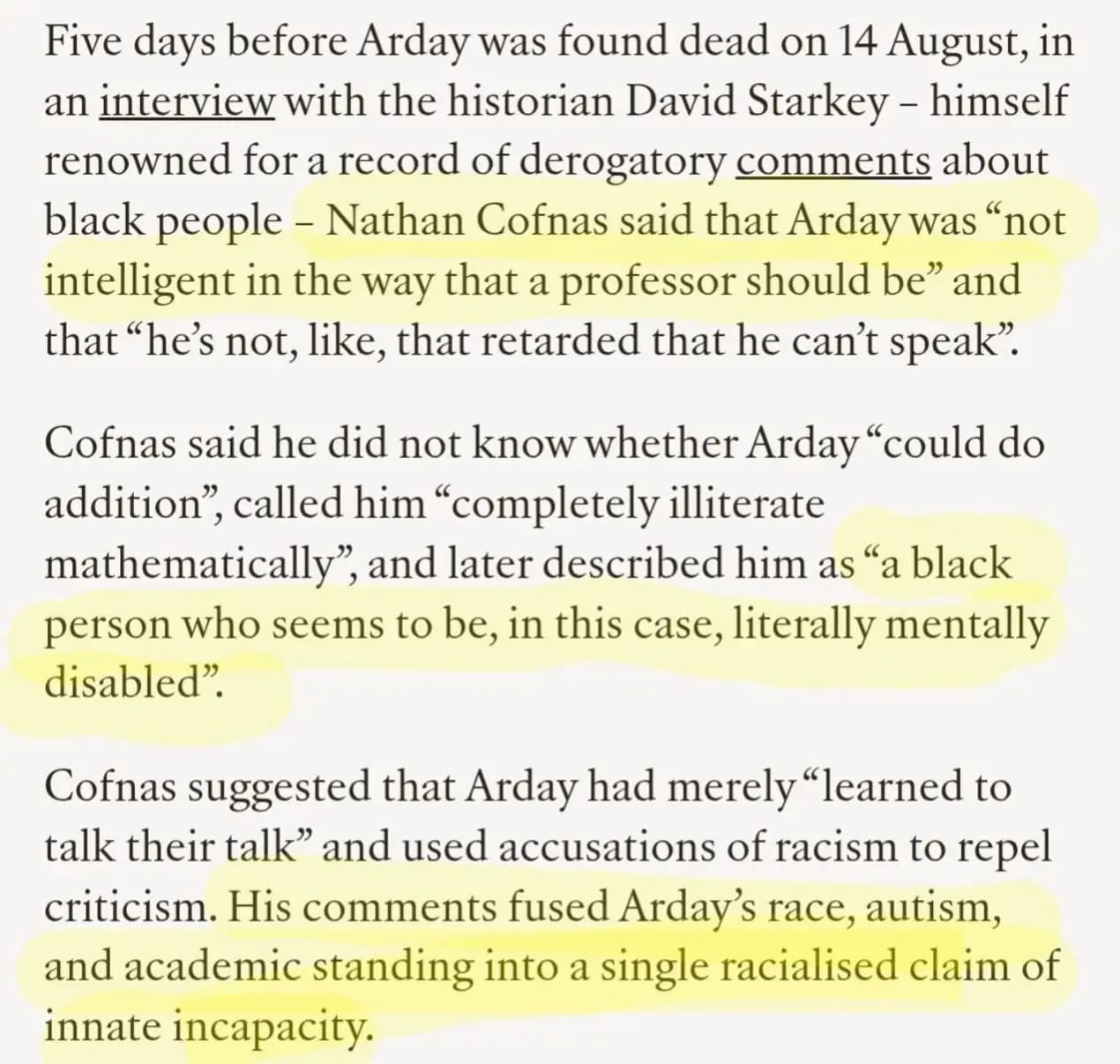
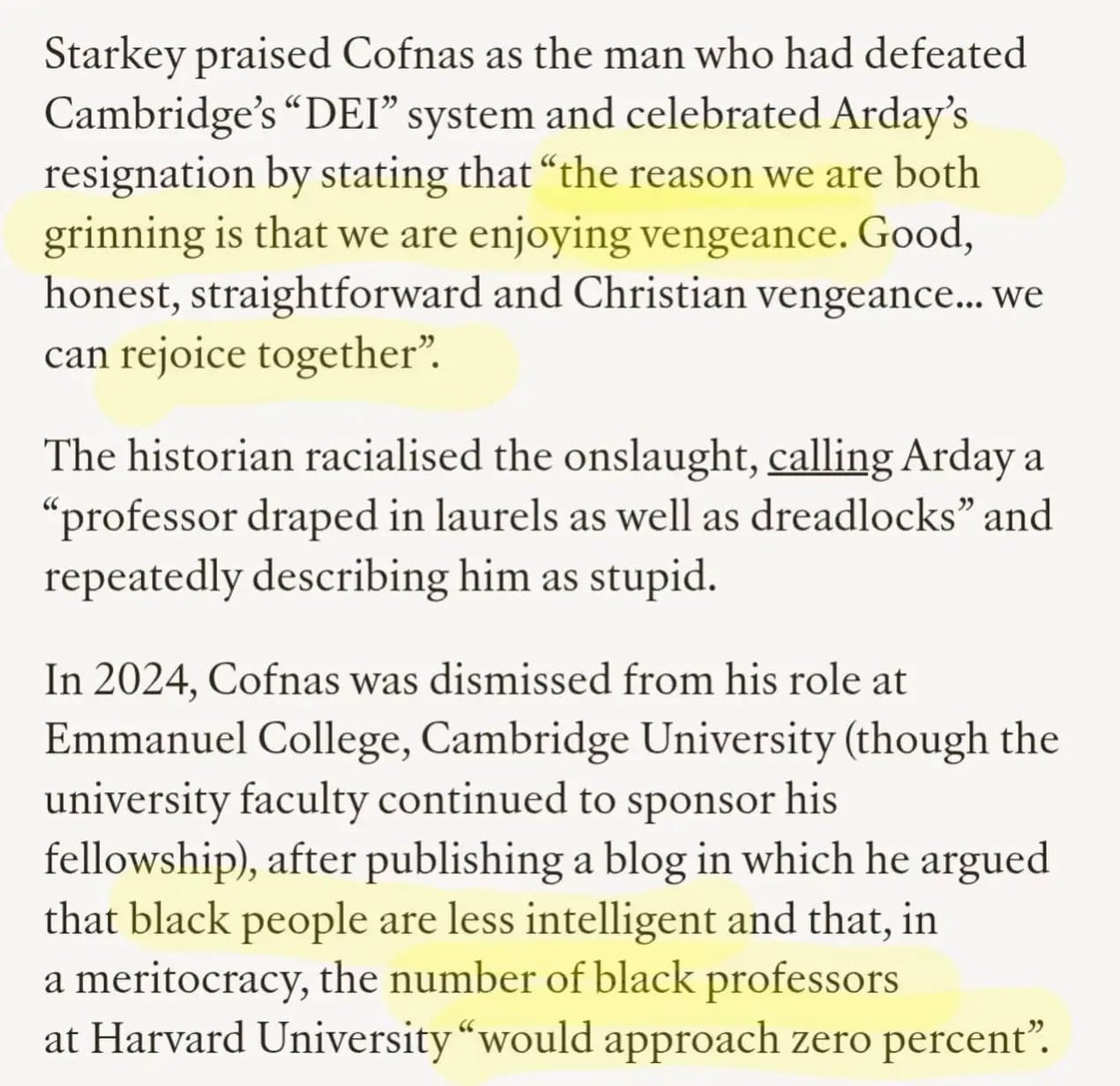
But the whole thing is wildly dishonest, too. I believe it was not for the plagiarism allegations and criticism that he was suspended! It was for this interview and the explicit racism therein.
From the Bylines Times article.
Someone else sent this to me and did the highlighting - I apologise that I cannot credit them as I can't remember the source 😭 But not mine.
Anyway, supporters want to make it into "he revealed plagiarism and now they won't let you do that when the scholar is a POC" etc etc
But it's not that, it seems. It's "you can't do an interview where you are racist trash". Which seems just fine and right, to me.
It's very ungrateful, but I really dislike "voice messages". Since my stroke, I find them very difficult to understand/process and it frustrates me and makes me grumpy. I spend minutes listening to well meaning friends, not really understanding what they are saying.
People use them because it's quicker, *for them*, than crafting an equivalent piece of writing that expresses their thoughts, concisely (saving *my* time). Blasting down un-pre-considered speech is much easier for the sender. It's the same rebalancing of the temporal writing economy effected by AI.
A conversation face to face, or even online, is very different. Somehow, in the conversational setting, the additional visual clues give me enough to go on and speech makes sense. That said, two people talk at once: I suddenly can't understand a thing.
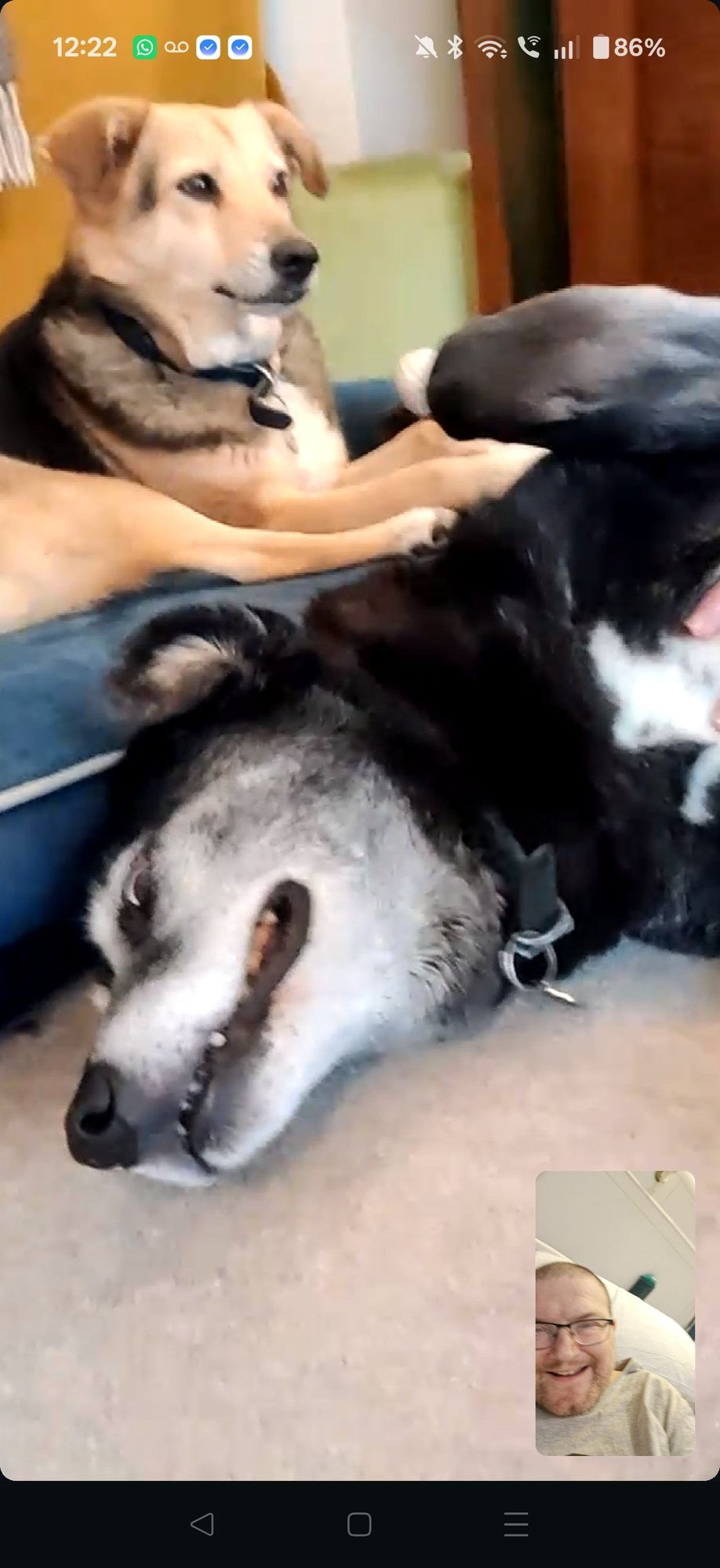
Pleasure (ice cream) is wellness, too
Tummy rub via WhatsApp 😂
I cannot get used to hospital dinner, served at 5pm.
Some more positive notes! I am making some progress on the IV feeding, although it is very slow. They think that my weight (actual body weight, not fluid) is probably in the 61-point-something kg region. I was around 60kg when I came in.
I then did a grip strength test yesterday with the dietitians, and it was hugely improved; my strength and energy levels are much higher.
Finally, I also managed to walk 3x the distance that I could manage when I first came in, and I am not falling over. This was one of the main problems I was having: I would fall while walking and just lose my balance completely all the time, so I wasn't safe to walk on my own. There is improvement!
Early on, typography at OLH (this journal's publisher) seemed low priority.
But scholcomms aesthetics have effects. They convey authority, permit recognition, and act as a low bar trust signal.
So we did commission new templates with a designer, a font geek, and our typesetters.
A hard week. Stress of IV feeding on my body has triggered a terrible rheumatoid arthritis flare.
So I plan to have a slow hospital weekend. I intend to read, to write, but, if I feel like it, to sleep.
To counter the dangerous fluid overload, I will up my dialysis schedule to 5 days per week.
The level of pain in my neck and skull base from this rheumatoid arthritis flare made me vomit, twice.
Re fluid: I worked out that I need to take off almost 4L every other day. This is an infeasible amount to manage on dialysis. If you pull that much fluid off in one go, you just feel terrible.
Copyright anxiety and legal chilling effects - comments on the original study.
The full published article link herein is, sadly, dead. I might track it down.
https://copyrightliteracy.org/2021/11/05/copyright-charming-or-chilling-introducing-the-copyright-anxiety-scale/
Using AI to write docs that need thought is bizarre to me. Not because writing inherently is thinking, but because it's the fun part!
You think, you write, you read, you revise to express better, it works, with luck.
So much AI removes pleasure. Don't waste time talking to your kids. Don't write!
Had to have a discussion with my renal team just now. When I came in I was 60.5kg. Today, I am 68.6kg.
The majority of this is fluid from IV feeding. It's catastrophic. I can already feel it impinging on my breathing.
I am about to pull off 3.5L via dialysis. The same tomorrow. And the day after.
Today, I have been thinking about the very difficult, thorny role of allocation algorithms in transplant processes. These automatically match, here on a national basis, an organ to a recipient who will benefit/needs it most and is most suitable for the op (and organ). But the ethics are so hard.
For example, there is a right for patients to appeal. But what do you appeal? You can't petition for the medical notes of the person who DID receive it (privacy violation!) to compare, but even if you did you would be arguing "I am sicker and more deserving than that person", with first-person bias.
Further, people argue for clinician intervention -- "we need a human safety valve" etc. -- but this would always be for THEIR patients, in a national scheme. Of course they want to save the person in front of them. But they don't know about the other patient who would have died without it, too.
The algorithms can also be bad. Very bad. That's true. They do not handle rare comorbidities well. Sometimes, they have never even seen a specific condition before + exhibit measurement bias. This can result in terrible injustices. Just a mis-premise in the design of the benefit score can wreck it.
But often these things are very time critical. You have a cadaver organ. It won't last long. You need to find the most suitable patient. A national clinician convention clearly isn't viable. The algorithmic route solves this problem.
It's clinician time, of course, but that seems worth it versus: 1 not having the system at all; 2 the patient dying because the system is radically unfair in her unique case.
Ideally, also, the model should be revised after this!
You get a situation where you might, wrongly, have a prevalent condition patient die because they were out boosted on the basis of somewhat shoddy evidence.
Or you sit back, say "we just don't reliably know" and the rare disease patient doesn't stand a chance.
I am having a most terrible day in hospital. Rheumatoid arthritis is flaring, probably due to the stress on my body of the IV feeding.
Pain through the roof, particularly in my neck, referring up into the skull. Blood pressure is still very high at 172/109. Headache, nausea, vomiting. Bowel pain.
Amusement and cheering aside, I also really like the taxonomy they built here for prohibited uses: "conceptualizing, outlining, drafting, revising, translating, [and] editing".
Like a CREDiT system for bad things you can do with AI.
So now, using Zotero, if you ingest a post from my blog, here's the outcome!
You might think the Blog Title field is wrong, with that <span> tag in there, but this is to force the correct title casing of the field. Here's how it appears in citations.
And the automatically generated PDF is added!
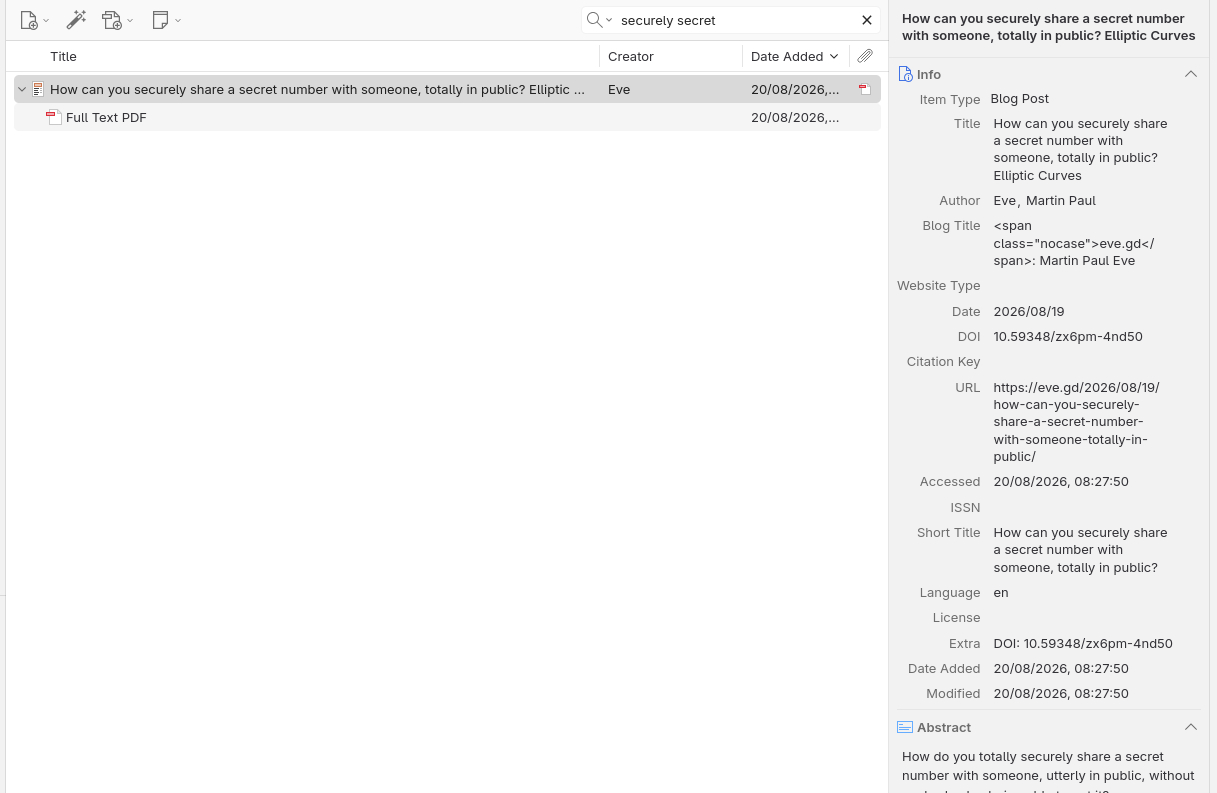

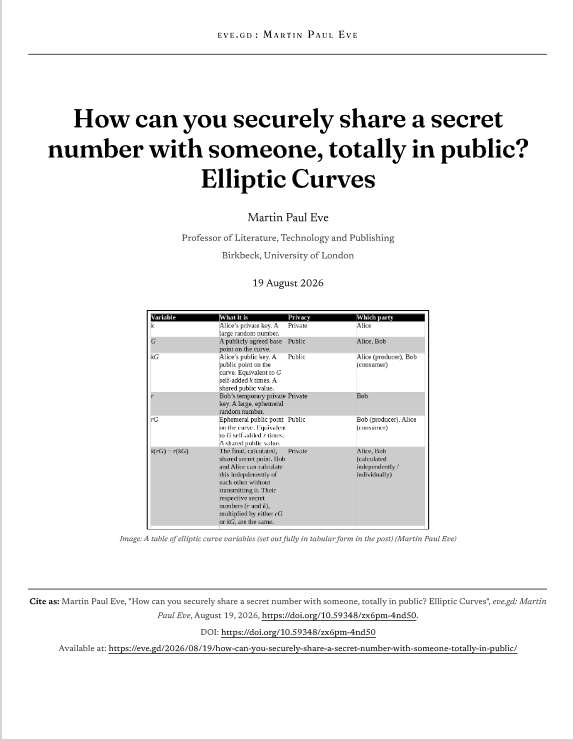
I rigged up the Jekyll static-site generator that runs my blog to automatically create a PDF of each post. Linked in each article + soon will be in the metadata for Zotero to DL.
This is part of my longer plan for automatic repository deposit and update. EPUB next, I think.
https://eve.gd/PDF/2026-08-19-how-can-you-securely-share-a-secret-number-with-someone-totally-in-public.pdf
Associated post: https://eve.gd/2026/08/19/how-can-you-securely-share-a-secret-number-with-someone-totally-in-public/
Curious that my most cited book has been removed from Google Scholar and is nowhere to be found. Oh well. This is why you can't trust the citation count BS.
Romantic love, madness, sexuality, childhood, the family, the self, pain, nationality, nature, leisure, and a host of other oft-considered "transhistorical" phenomena are actually historically relative.
Imagine you want to share a number with someone secretly, but you can only communicate in public. How?
The answer is modern asymmetric cryptography (e.g. HTTPS in your browser).
But it's quite hard to understand so I explained elliptic curves to myself for my Dark Web book.
https://eve.gd/2026/08/19/how-can-you-securely-share-a-secret-number-with-someone-totally-in-public/
"Indigenous excellence: confronting racism and complicity in peer review"
https://academic.oup.com/heapro/article/41/4/daag117/8759432
Ridiculous money grab
This is remarkable.
"we show that directing attention towards bodily sensations, compared to attentional distraction, produces markedly more regulated immune responses"
It's been my worst year for reading, ever - at least outside of books for research work - owing to ill health. After a morning of research reading + writing, then a stimulating day at Knowledge Commons, I crash downstairs and fall asleep in my chair as the anemia from kidney failure takes hold.
"It was warm to start with, and an exploitative civilization wrecked its natural balances fifty or sixty thousand years ago, burned up the forests for kindling" - Le Guin, 1969 on the planet "Gde"
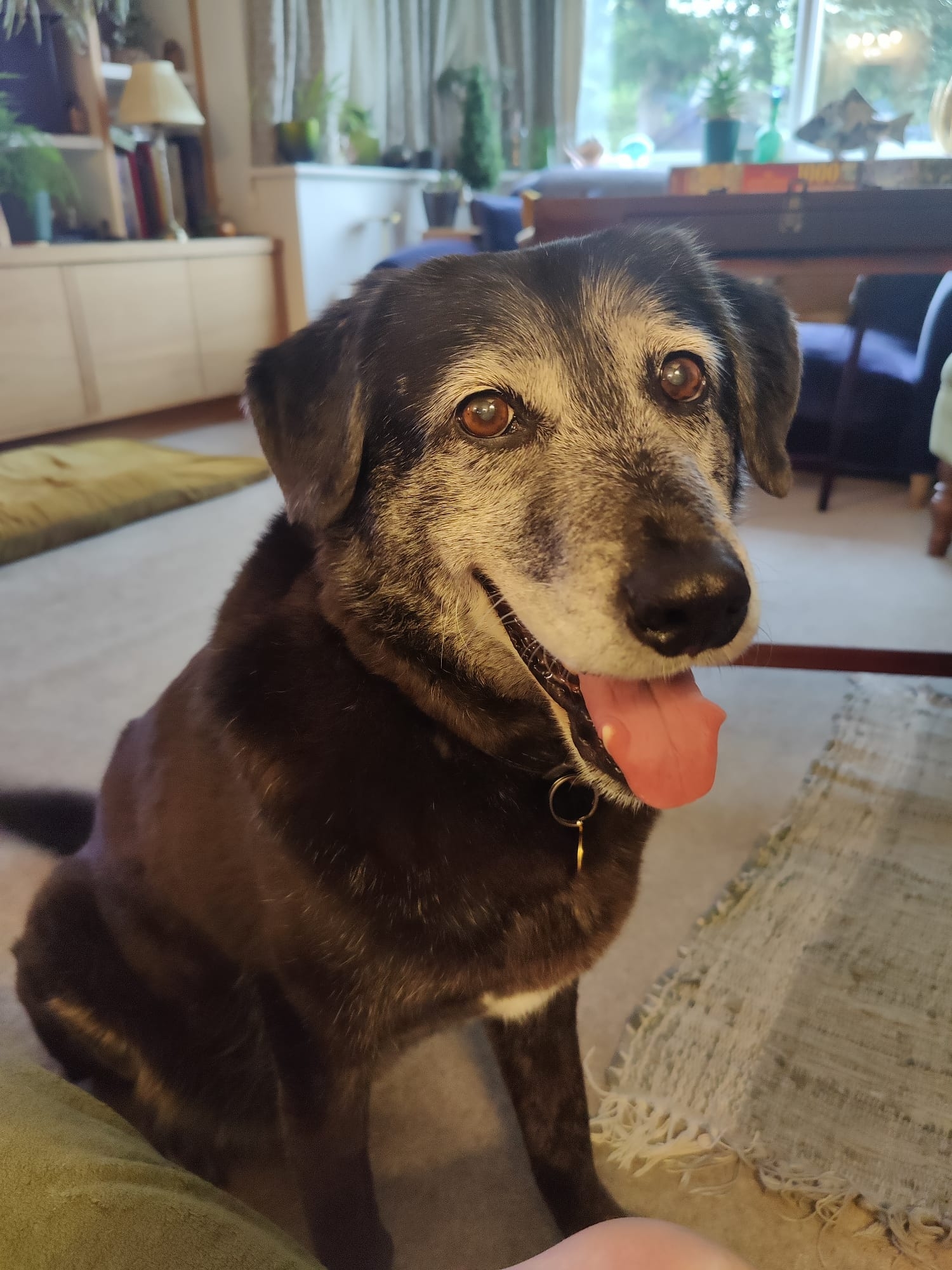
This photo of Luka at home is cheering me up in hospital. Happy boy.
(But first: please do work out a sustainability model and a transition of power/governance system, learn about digital preservation and ensure you have policies in place, and get advice from others who have gone before.
This is totally do as I say, not as I did.
I plunged in. I learned by doing (and by having done it wrong). I did it all myself (not sustainable unless this was to be my fulltime job).
That ethos has merit, too, though. But it depends how many others already rely on what you are doing.
Another personal log.
Feed, Infection Control, Fluid Overload.
On IV feeding, dialysis, gastroparesis/bowel dysmotility, and trying not to get killed by infection in hospital.
Subtitle: lots of suffering.
https://eve.gd/2026/08/17/feed-infection-control-fluid-overload/
Healthcare assistant: "I have your toast, but it's cold."
Me: "Great [with sarcasm]. Thank you, though."
HCA: "To be fair, getting hot toast in hospital is a luxury."
Me [screaming internally]: "Why is this a difficult luxury?! This is not hard!"
Me [aloud]: "Ah, yes. Haha. Thank you, again."
I realised yesterday that when you want to write to someone, cold, saying that you admire their work and can we collaborate etc., you now have the added problem of sounding like an AI if you summarise their work. Urgh.
Though it seems pretty weak as it doesn't apply if the text has been through "a process of human review".
This evening, I read Egbunike, Nwachukwu Andrew, ‘Digital Transformation of Book Publishing in Nigeria: Stillbirth, Stunted Growth, or Both?’, in Nigeria’s Cultural and Creative Industries: Perspectives, Problems, and Prospects, ed. by Obiaya, Alakwe, and Nzeaka (Routledge, 2025), pp. 154–69
I read this after his recent @clockssarchive.bsky.social interview.
I don't know whether I was shocked or not to learn that Nigeria's least profitable cultural industry is book publishing. I also did not know that OUP set up shop in Ibadan in 1949 and went on to publish Yoruba poetry.
But the general portrait here is not optimistic. The case study of OkadaBooks and its demise after 10 years, owing to "macroeconomic challenges", is somewhat sobering.
"All the capital piles on and chokes out other possible paths"
Seems capitalist to me.
"competition rages in direct proportion to the number, and in inverse proportion to the magnitudes, of the antagonistic capitals. It always ends in the ruin of many small capitalists" Marx, Capital, Ch25, Sec 2
Caliban.
Well, that's scuppering today's coding. Thanks, Github/Microsoft.

@jamescummings.bsky.social hi James - have you seen this? https://github.com/Yashee1/EncodingPedagogyUpanishad
If this work seems of interest, do please drop me a DM.
So typical. NHS sends me a survey, as a complex patient, saying it's about coordination of care. I thought: that sounds good.
Several questions were just "have you tried eating more healthily?"
Oh yes, because that will re-grow my kidneys. 🙄
This morning I was re-reading Singh, Simon, The Code Book: The Evolution of Secrecy from Mary, Queen of Scots to Quantum Cryptography (Doubleday, 1999).
It's really good at explaining the mathematics of cryptography to non-mathematicians.
I also looked at the groundbreaking Diffie, W., and M. Hellman, ‘New Directions in Cryptography’, IEEE Transactions on Information Theory, 22.6 (1976), pp. 644–54, doi:10.1109/TIT.1976.1055638
Much harder to follow in parts for a non-mathy like me, but still a fascinating document.
An excellent post!
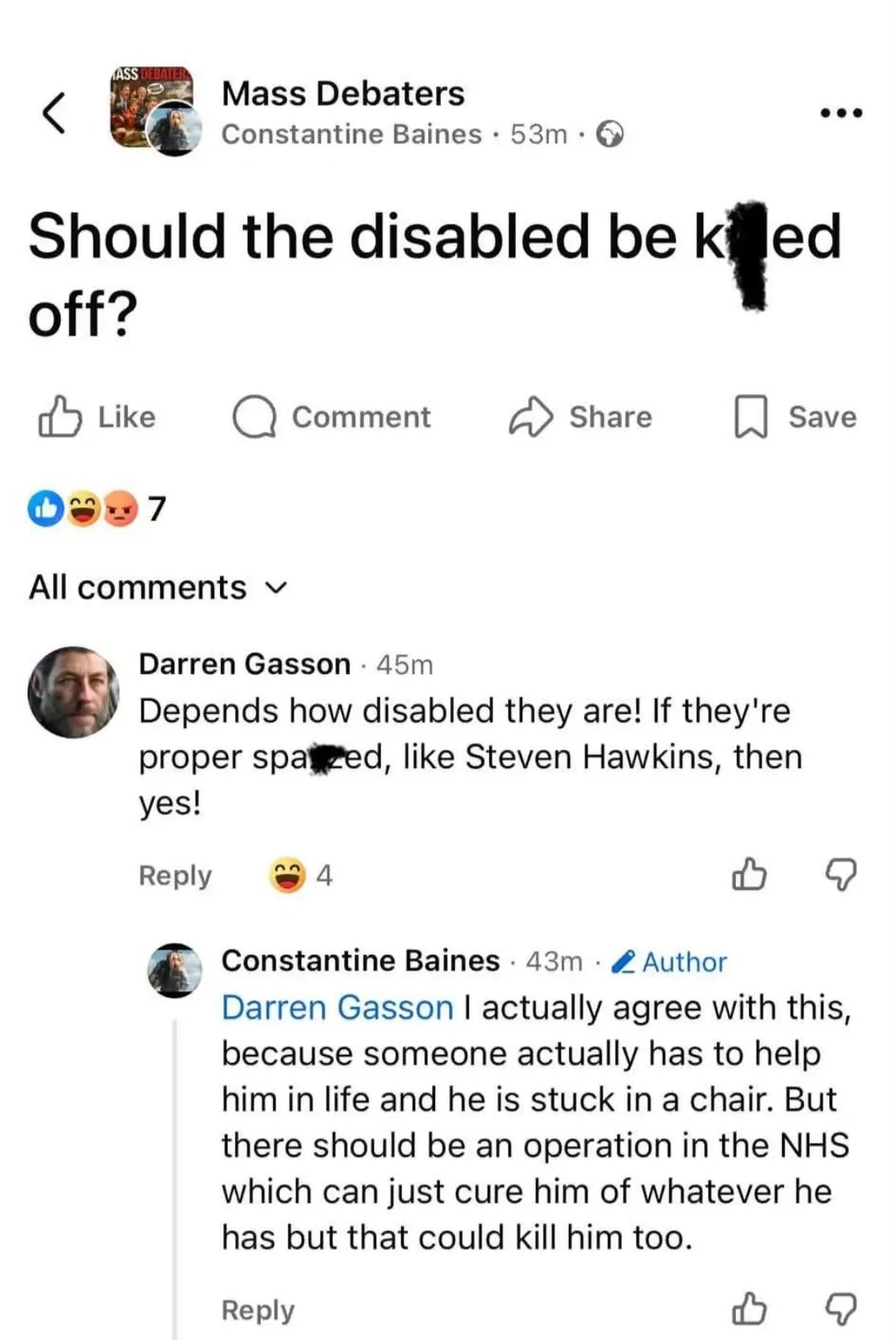
Trigger warning: severe, distressing ableism.
This is the level of discourse we have in the UK around disability. Active calls for the murder of people with disabilities. It's like Aktion T4, again.
Credit to @glasgalf.bsky.social for the image.
Published at last!
Martin Paul Eve, ‘Review of @elikaortega.bsky.social, Binding Media: Hybrid Print-Digital Literature from Across the Americas’, American Literary History 38, no. 3 (2026): 1–4, https://doi.org/10.1093/alh/ajaf147.
"For many of these patients, leaving the house is already an act of courage. Unfamiliar streets, unreadable signs, the constant low-level anxiety of navigating a world built for the fully sighted. These glasses have quietly made that easier."
https://www.theguardian.com/technology/2026/aug/14/smart-glasses-controversy-sidelines-the-benefits-for-disabled-people
Great.
After last night's horrible sickness, this is how I woke up today. Seem to have developed an eye infection overnight. Absolutely thumping headache. Blood pressure sky high. Doctors have given me eye drops and new blood pressure meds.
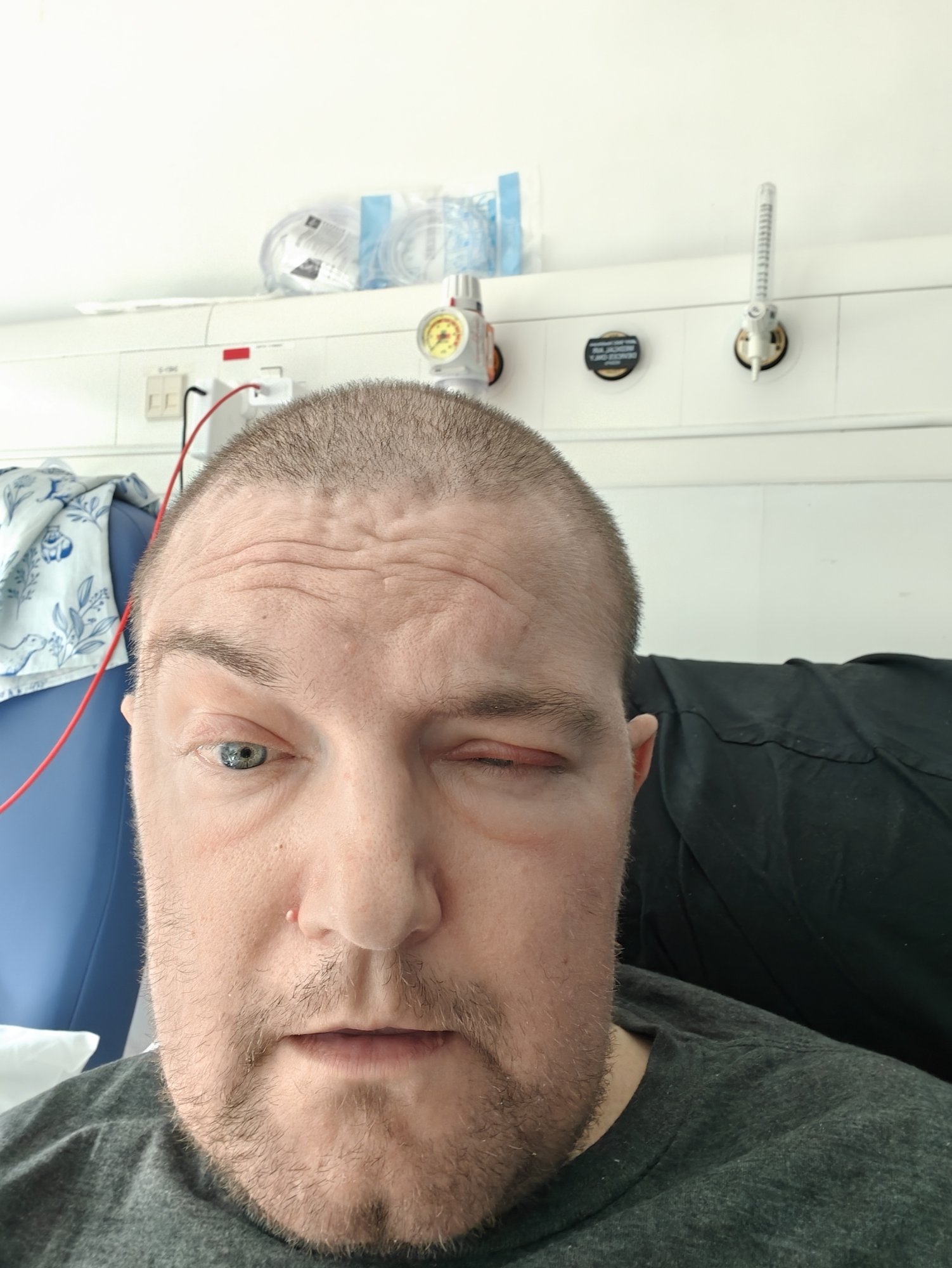
A very difficult afternoon and evening of nausea, vomiting, bowel dysmotility, massive hypertension, and extreme headaches. Miserable.
Just had a UK emergency alert on my phone that scared the wits out of me.
So much disability hate speech in the UK media.
"broadcaster GB News insisted it had nothing to apologise for after a right-wing commentator ... suggested the best way to cut the number of disabled people claiming benefits was to starve or shoot them"
https://www.disabilitynewsservice.com/how-to-fight-back-against-rising-tide-of-hostile-media-coverage-targeting-disabled-people/
"Among the worst examples across the UK media have been a column by Jeremy Clarkson in the Sunday Times, in which he compared disabled benefit claimants to dogs; a column in The Times by Kathleen Stock, in which she questioned why many young women were using walking-sticks"
Here's one of them!
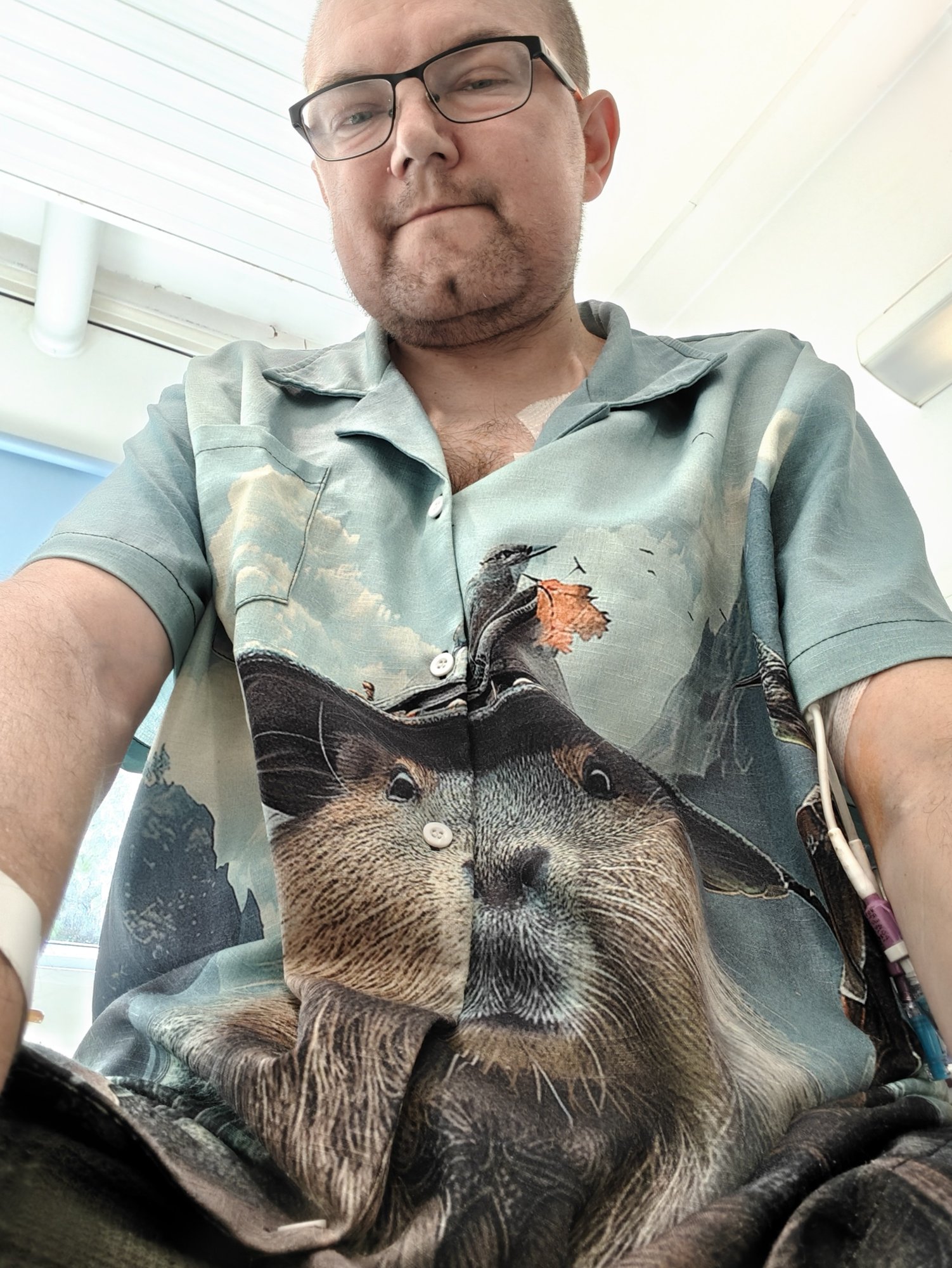
For haemodialysis, I require access to the vascular access ports - a "central line" - in my chest. So I need to wear a shirt that can be unbuttoned.
My wife has bought me a series of ridiculous capybara-themed shirts for this purpose. This is fine when at home, but causes hilarity on hospital ward!
A terrible history of a deaf man who was not mentally ill and the racism and ableism he faced.
"Wilson spent several years in the criminally insane ward until he was sterilized and castrated based on a state eugenics program"
https://en.wikipedia.org/wiki/Junius_Wilson
Farage: "the result in Clacton speaks for itself"
Errm, yes, it does. But not as you think.
Thank you to everyone for the kind wishes on my hospital admission. I am very sorry if I did not reply to any messages; it has been hectic. But I very much appreciated the generous sentiment of these posts.
Anyway, I wrote about my first 24hrs https://eve.gd/2026/08/11/admission-meds-vascular-access/
I learned a little more about the IV feeding process, which should start today. It includes a substance called "Nutryelt" which provides trace amounts of minerals that the body needs to function but cannot produce itself.
It provides: Selenium, zinc, copper, iron, manganese, fluoride, molybdenum, chromium, and iodine.
I had not even *heard* of some of these. Molybdenum in particular!
Wikipedia tells me:
"Without molybdenum, nitrogen fixation would be greatly reduced, and a large part of biosynthesis as we know it would not occur. Molybdenum is also essential to many individual organisms as a component of enzymes, particularly as part of the molybdopterin class of cofactors."
I am none the wiser.
I believe the nitrogen fixation to which it refers is the breakdown of nitrogen (which is abundant in the air we breathe) into ammonia and nitrates, which we also need to live. Maybe.
You need a chemistry or biology degree to understand this article.
So I went to Simple English Wikipedia, designed for those who struggle to read complex English (eg someone learning English; someone with a disability etc).
It often contains helpful exegesis of scientific articles like this, for non-scientists. But it can also miss details.
In this case, it told me helpful things about how it "helps to make metal stronger, especially in high temperatures, and makes it less likely to rust".
But it does not tell me why I need it in my body.
I don't think we need to stop me rusting...
A helpful finding from @agvbergin.net gave this:
"People severely deficient in molybdenum have poorly functioning sulfite oxidase and are prone to toxic reactions to sulfites in foods."
https://en.wikipedia.org/wiki/Molybdenum_in_biology
Then: '"Sulfite" is jargon that encompasses a variety of materials that are commonly used as preservatives or food additive in the production of diverse foods and beverages.'
So basically, without it, you will have an allergic reaction to food with preservatives.
https://en.wikipedia.org/wiki/Sulfite_food_and_beverage_additives
Now, @agvbergin.net is sceptical of this claim and its references. Hmmm.
Perhaps this is not well understood... But we know that without it, you die?
Woke up to Wikipedia leading me to The Yongle Emperor and then to The Yongle Encyclopedia
https://en.wikipedia.org/wiki/Yongle_Encyclopedia
Going wonderfully for Cambridge right now...
The steganography:
Em-dashes. 😂
More seriously, this is interesting... The problem is that the most useful use of such a watermark would be, say, for educational institutions to detect them. But if you say what the watermark is... It will be removable.
Some kind of zero-knowledge proof? This would allow an end user to prove whether a statement is AI generated, without the checker knowing the watermark. But I don't know what that function would be.
There are many more minor things that I hate about hospital admissions, but at least one of them is the insistence on taking away my meds and dispensing them to me. I've done my own drugs, day and night, for 20 years. I am clearly competent. What bugs me is: they often get it wrong.
If they have taken out the pills, I can't tell, from looking, what they have given me... And whether there's a mistake.
I have been admitted to hospital for TPN (Total Parenteral Nutrition/IV feeding).
There are some difficult vascular access decisions to be made that could have future life-threatening consequences.
But I will come to that after the doctors have met to discuss.
I assume @mkirschenbaum.bsky.social has seen this...
"x64 port of Microsoft Word for Windows 1.1a arrives — you can now run this seminal 1990 word processor natively in Windows 11"
https://www.tomshardware.com/software/microsoft-office/x64-port-of-microsoft-word-for-windows-1-1a-arrives-you-can-now-run-this-seminal-1990-word-processor-natively-in-windows-11
When looking for the phone number for my dialysis unit, I came across job ads for the band 5 nurses who administer haemodialysis on the ward.
Needling patients w/ enormous needles; life/death alarm situations; complex patients. You are saving lives every day.
£29k per year.
Our world is so wrong.
I have an excellent, knowledgeable and helpful rheumatologist whose first name is Mohammed. He doesn't call himself Dr <Surname> but instead opts for "Dr Mo". This is all very nice and familiar, but I can't help but think of...

I give up
I will now begin dialysis setup, then haemodialysis.
During this session, I will continue my reread of Ursula Le Guin's _The Left Hand of Darkness_.
I can still remember, 20-years on, the most hurtful, cruel thing someone has ever said/done to me: it was a doctor.
I was 20. My partner and I were trying to conceive. But I had suddenly developed severe rheumatoid arthritis. I was very, very unwell. I couldn't walk or dress myself.
I was sent to the hospital and subject to a battery of horrible tests. Then I was admitted to the rheumatology clinic.
After it was decided it was not a reactive arthritis we had to treat it. But most of the treatments for rheumatoid arthritis cannot be taken when trying for a baby.
My wife is older than me, so there was some time pressure, but it was obvious that I needed help, fast.
I spoke to my doctor. I laid out the situation. I asked whether they did sperm storage if they are giving drugs on which you can't conceive. [No, of course not.]
She clearly empathised but had to call her consultant. He came in and listened for 30 seconds to the outline of the situation. "Get him on the drugs" was his response, to her (not me). Then he left. Those words shot through me. I could have refused, I guess, but it's hard to convey how ill I was.
And that's why I will never have children. Five words and an awful autoimmune disease.
I have never been able to stop the meds. When I do, my god, I am crying in pain just lying still.
I am OK with it, now. I think having children now, in my current state of health, would probably kill me.
There is a logic to what the consultant said. The sooner you treat RA, the better the long-term outcomes. It is likely that he had seen so many cases of extreme disability from this awful disease that he was doing his best to save me.
But I'll never forget those five words.
They radically changed my life. They still resurface in my memory sometimes.
Sure, it's not war, famine, violence. I am lucky to have the treatments.
But having children is a significant life event, from which, I perceive, these words cut me off.
Perhaps it wasn't the words, but just the drugs themselves.
But it's the words that I remember.
I have had to see this clinician persistently for 20 years. He helped me quite a lot when I had a stroke, for which I am grateful.
But I have always had to suppress my internal anger and hurt from this memory, which resurfaces whenever I see him or he treats me.
I was interviewed by Mitsutoshi Horii on the "crisis" of the humanities and the universities.
https://works.hcommons.org/records/ejxeg-63a20
Clarkson benefited from state support when he worked for the BBC, he's received state subsidies for his farm, he has received NHS state-funded care for his cancer and heart treatment, while many disabled people on benefits live in severe poverty.
https://www.disabilitynewsservice.com/sunday-times-refuses-to-apologise-for-clarkson-column-that-compared-disabled-benefit-claimants-to-dogs/
These words are adapted from the linked article.
Exciting! Details of new Fluke 2xCD remix edition of The Second Bite just leaked to distribution platforms. Steve Cobby, Nick Warren, Justin Robertson, and many others making appearances...
https://fluke.fm/discography/fluke/the-second-bite/
You COULD argue that we should redirect everything non-essential to the climate crisis. For if there is no planet, or one riven by constant war and death, what is the point of it?
But then you get to asking: what is "essential", compared to that?
But the main point of the argument here is scale.
These things are HUGE. SO, SO, SO much money being piled into this.
Just that amount of investment would have had a huge impact on a US (and elsewhere)'s transition to green energy.
It is worth weeping over. We did this, instead of saving the planet.
Donkey research to get behind. Don't be an ass! Have a read... 😂
I just shared because it's research into donkey emotions.
An interesting phenomenon.
This book, from 1990 (I was 4 years old), lists a "Martin Eve" as a co-author. OK. Someone else shares my name. https://ci.nii.ac.jp/ncid/BA12931720
This OpenAlex record, though, has attributed it to me, as "Martin Paul Eve", and added my ORCID https://openalex.org/works?page=1&sort=relevance_score:desc&search.title_and_abstract=Background+to+contemporary+Greece
It has not been pushed to my ORCID record, though. So I will need to try to amend this.
I am sorry to hear of the death of William Orbit
https://www.theguardian.com/music/2026/aug/07/william-orbit-pop-producer-madonna-all-saints-dies-aged-69
I cannot tell you how tempted I am to take my triple monitor setup and rig it up in my hospital room next week.
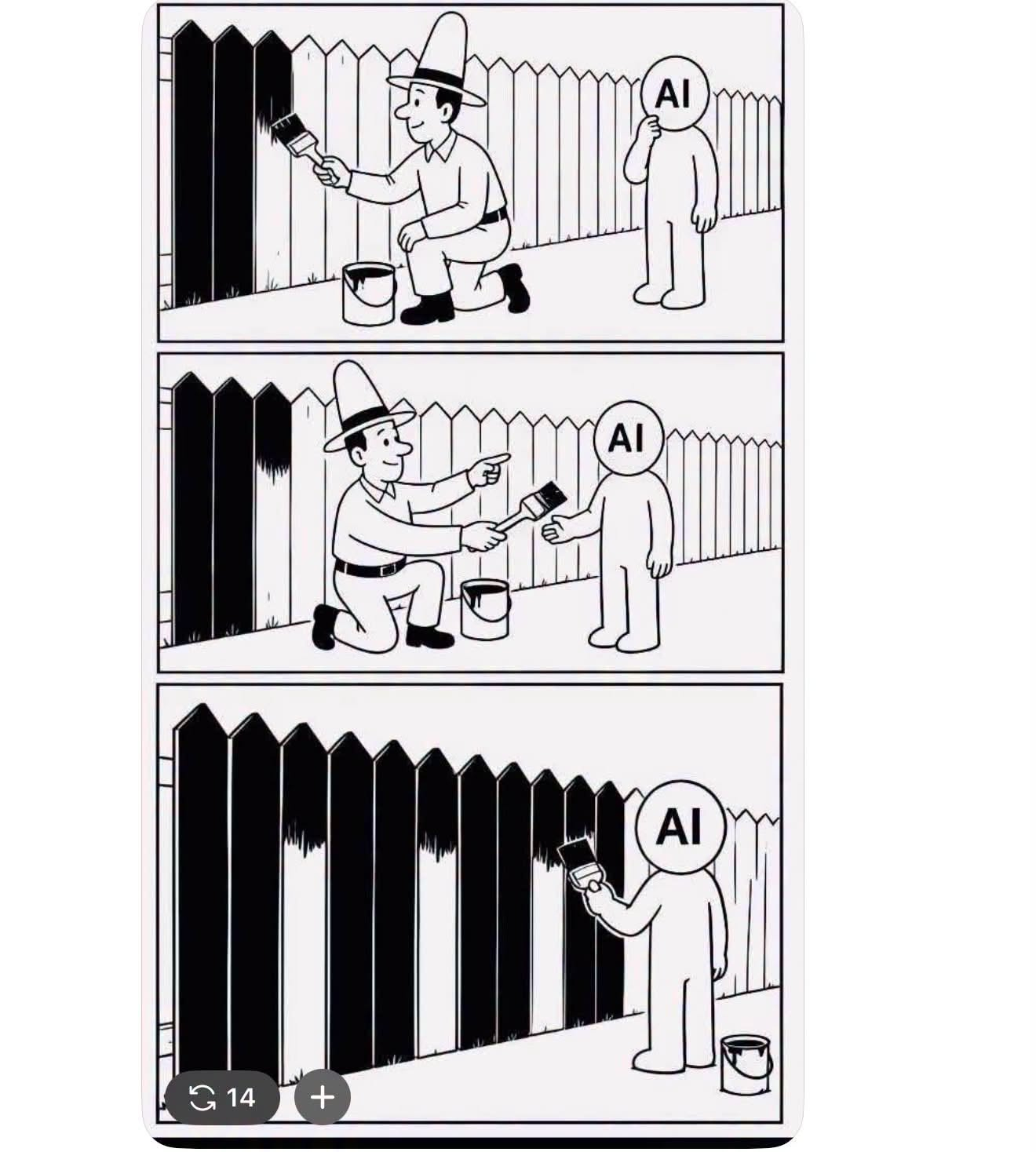
Just seen this anti-AI image. Really, all it is metaphorising is computer programming.
Not even accurate. AI would understand how to complete an incomplete sequence with this input.
But regular programming would not. It's the elementary mistake of new programmers: not being utterly precise.
Unless your book is open access, with an open license... In which case, libraries can own it and can have a perpetual license.
Oh dear.
My doctors say my extreme weight loss due to chronic norovirus since January is now very dangerous and needs urgent clinical intervention for severe malnutrition.
I am to be admitted to hospital for full IV nutrition "early next week". Obviously, I am upset by this dire medical situation.
The admission will be of indeterminate length. I hope to transfer home and continue there once my readings are settled, but this is to be negotiated. At least I will not starve to death.
Yes.
I suffered a lot - and I mean a LOT - for a good 10 years. I didn't want to need a stick at our wedding. I would over-extend myself, having a dance on a very good day, then plummet into catastrophic pain for days after.
I was always brought up to feel that appearing to need help was shameful.
It was a terrible mentality. Even as I became iller and iller and still worked I didn't want to claim any benefits, because I "wasn't disabled". As though repeating this mantra would make it true. I considered it in 2018.
Then, my kidneys failed. Totally. No transplant possible. Dialysis for life.
It was due to immunocompromise from the treatment for the rheumatoid arthritis. I got a virus that nuked my kidneys. The kidney failure caused severe muscle deterioration and atrophy on top of my mitochondrial disease. I got weaker and weaker.
So I finally got there. I got help. And it did help! Sticks and wheelchairs made longer-range trips possible again. PIP helps with some of the extra costs. I still work.
Currently, I've lost so much weight and muscle due to ongoing chronic norovirus. Another gift of the immune system failure.
But this embarrassment and shame at appearing disabled, at appearing vulnerable is an appalling societal attitude. Why is it deemed so wrong for those who have experienced chance misfortune to rely on wider society to help them? It is terrible.
"Researchers may cite an infrastructure as a necessary part of their work in a grant proposal, but funding flows only to the researcher and research project, not the repository."
https://issues.org/open-data-research-%20infrastructure-gibson-thaney/
I am outraged by the disgusting, anti-science, witch-hunt treatment of Dr Fauci in the US. His work on the vaccine rollout stemmed the global tide of Covid; it protected me, in the UK, just through stopping its spread.
So I emailed him a personal note of support.
He replied to me! Signed it Tony!
But I cannot imagine what it's like to be on the end of this level of persecution. It's serious 1930s Germany territory. Appalling.
And they want this in the UK. They want to go after Chris Whitty.
Alright, I might go after him for not doing enough. (Joke.)
But they want to go the other way.
A deep philosophical question from a profound thinker. Really difficult.
But maybe it's because it lets them move about more comfortably?
Maybe you suddenly are seeing them because, for a short period, we were moving towards some kind of progress where disabled people could be visible?
"There is, however, a means for preserving databases in the UK – it just hasn’t been implemented as yet."
I think funders who enable projects with database components need to include better data sustainability requirements. And technical reviewers who appraise it.
That's not straightforward - as this post rightly notes - but it's also not impossible. It is possible, if difficult, to create persisting governance and economics structures that outlast a digital project. (I know. I've done it.)
Outrageous in many ways. Also, the Poisson chap here quoted is very ungracious.
In the era of AI, this culture of accusation and suspicion is just going to escalate.
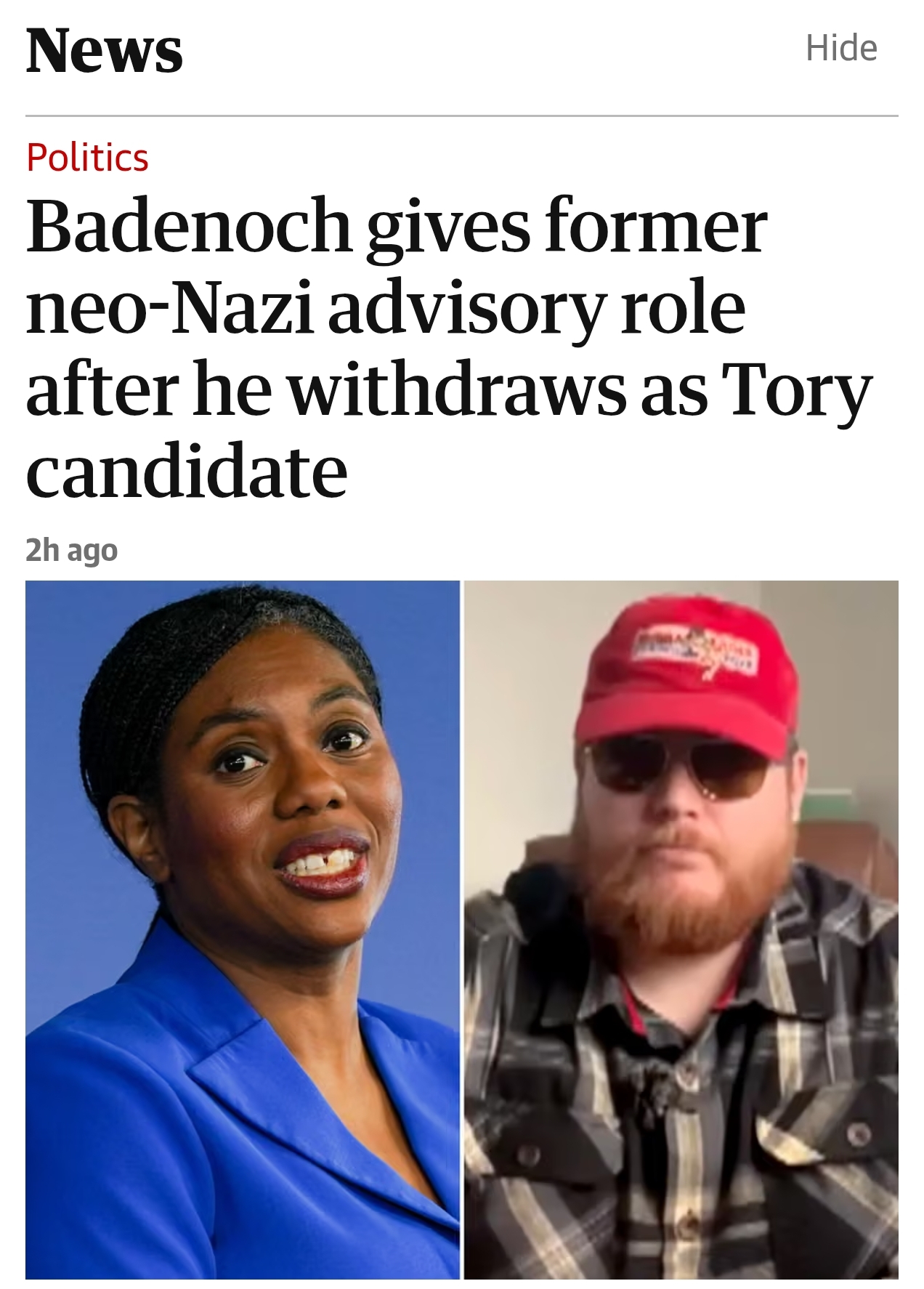
What, exactly, does she think he can advise on? How to become more Nazi?
I know, she's probably said "he's gone through it and can advise on anti-hate stuff" or whatever, but it's clearly, imo, BS.
My friend's daughter is donating her hair to make wigs for children with cancer.
The world is terrible. There are so many worthwhile causes to support.
But a little girl giving her hair to another very sick child is so pure. Hopeful.
Do donate if you can.
https://www.justgiving.com/page/lyra-haircut
Every morning, just before my writing time, I do some walking practice with help from my wife. This is very difficult. My left hip needs replacing and so is very, very painful. My right replaced hip means my leg is turned out. I lose my balance and fall at the smallest camber. It's hard. Very hard.
Exhausting just walking a few steps, really. But I have to do it. I need to rebuild the muscle as much as possible, so that when I do have the hip replacement, I can recover from that. It will be 10x harder in my current state. So I stumble and trip and fall along.
My wife stops me falling and gives me direction. But it's hard when it's someone you love/are very familiar with doing these things with you. "Bring your heel in. No, HEEL IN" she says. "I am bringing my bloody heel in!", I retort, through the immense pain of the effort.
Anyway, I am now exhausted from walking a paltry distance. But I did it. And I'll do it again tomorrow.
The necessity of this is also being driven home to me by the fact that my wheelchair is being serviced... So I can't go anywhere, at all.
"Look around at the paltry nods to accessibility in our public spaces or the degrading assessments of people seeking to claim disability benefits. For people who have lived their lives independently and able-bodied, the slip into dependency can be hard to accept"
https://www.theguardian.com/commentisfree/2026/aug/04/older-people-help-family-care-reform
This is a very interesting article.
'The simple disagreement about a few inches of land escalated into an all out war, with the Gibsons left devastated when the News removed a "sentimentally valuable" squirrel ornament from a post between the houses.' https://www.independent.co.uk/news/uk/home-news/steve-karen-gibson-thundersley-essex-b3026251.html
Excellent thread of comments on PubPeer if you want to see how, in scientific work, just a different interpretational move can lead to the opposite conclusion...
More grim analysis of the situation at UK universities.
But it warns of damage only to "top universities". His previous piece also does so.
Accepting this hierarchy is the precise elitist logic they seem to want: all but Oxbridge + UCL etc. can close.
https://democracyforsale.substack.com/p/inside-britains-university-crisis-heathershaw-exeter
I accept that it *might* be a plea to the public, who could also believe in this BS.
But it appears to show little solidarity. Oh yes, don't worry about the regional universities. Never mind what they do for the students and towns there.
No, it's the top, the "premier" ones we need worry about!
@scottbot.net rats. I just saw a flash of an interesting post about civics/individualism and superman that seems to have disappeared...
A geeky post about Star Trek!
Specifically, about the extended interviews on To the Journey: Looking Back at Star Trek: Voyager, the Voyager documentary (that took years and years to complete, but is finally released!)
https://eve.gd/2026/08/02/the-extended-interviews-on-ito-the-journey-looking-back-ati-star-trek-voyager/
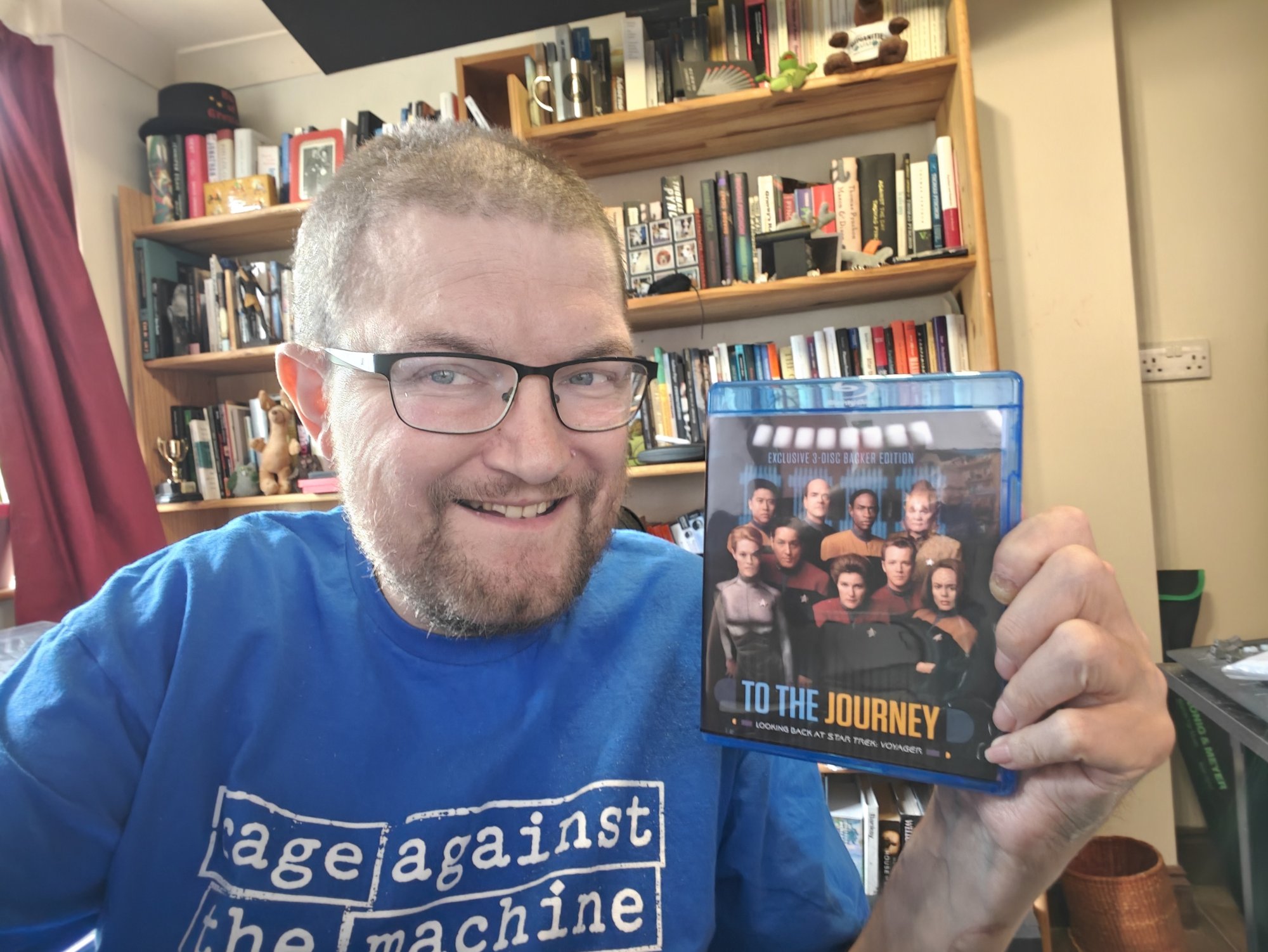
Wow! I backed this project in 2021 and the Blu-ray has just come through my letterbox.
It's the Star Trek Voyager: To The Journey documentary!
Our names are in the credits.
I thought this project was dead so many times. Amazing that they made it to delivery. Applause!
I watched the film itself in digital copy earlier in the year. At that point, they were pessimistic about physical media. Nobody was willing to press it post-covid and there were huge licensing fees, as I understand it. So many challenges. So hard to anticipate these costs and problems.
I've had loads of those scam "book club discussion" invitations. The use of AI to make the invitation plausible is such a mean touch.
Excerpt: my book explores "how computational methods are influencing the study, interpretation, and dissemination of literature".
Except, of course, these descriptions might as well have been based on the blurb alone:
"your book offers valuable insights into the opportunities and challenges that digital humanities present for researchers, educators, and readers alike".
No detail on any of those insights, though.
These summaries are, of course, vacuous. The book is The Digital Humanities and Literary Studies. So it's unsurprising that it presents "insights" into the pros and cons of DH for researchers, educators, and readers".
The UK solicitors' forms for selling a house are very revealing.
Someone, somewhere has quibbled over the sale of a house based on whether "toilet roll holders" are included or excluded.
If ever I move house, again, I promise my future self that I will keep better records of every guarantee, invoice, and scrap of paper from any tradesperson, as the solicitors will doubtlessly want it, 20 years from now.
Mornings with rheumatoid arthritis remain awful. The hardest part is first moving my legs. I have to wait for the morphine to kick in and then I can broach the first movement, knowing nonetheless the shudder of pain that will follow. Another day.
It's that foreknowledge that causes a paralysis. Knowing how much it will hurt, then having to do it anyway.