Ten years ago, I had a bad cold. This was not unusual as I have hypogammaglobulinemia (which means an abnormally low concentration of gamma globulin in the blood that leads to an increased risk of infection). But this cold was pretty terrible and quickly led to a secondary bacterial infection requiring antibiotics. I was coughing a lot and very hard. And I was starting to get headaches. That should have worried me far earlier than it did.
I had also just been promoted to full Professor at Birkbeck, University of London; among the pinnacles of an academic career. I was the youngest Prof of English in the UK at that time and was on top of the world about it. We went to see Matilda the Musical to celebrate and then on to a pub. It should have been an absolute high. But I wasn’t feeling great. There was still the cough and the headaches were getting worse.
But I ploughed on. So I went to Madrid for a scholarly communications workshop. This was all going well until, suddenly, I had a migraine-like attack mid-way through one of the sessions. My sight was obliterated by black fragments and I only just made it back to my hotel room before I was very sick. I felt awful and had to abandon the rest of the session. The next day was not much better and I was very anxious about the migraine returning. Fortunately, it was only a short workshop and I flew back home, coughing and with a blinding headache.
Over the next few weeks, the headache grew in intensity. Light sensitivity became unbearable. Eventually, I went to the out-of-hours emergency GP/urgent treatment centre with this and was prescribed Triptans for migraine. This was a catastrophic mistake, but I wouldn’t find that out for a while.
I tried the drugs, but the headache just got worse and worse. I was being sick and was unable to get out of bed. One morning I awoke to find my face sagging down on one side. So, I phoned the GP again and said I needed an urgent appointment. I walked down the road to the doctor with my eyes almost closed, stopping every few metres to try to absorb the pain in my head, which pounded with every step and from every slight ray of light. My wife urgently drove to the doctors to accompany me. The doctor examined me – taking a very long time and with great care over it, indeed, to her total credit. I was sent outside to wait while she made some calls and the other patients were eyeing me with anger. I apologised to them and told them that I had to go to hospital – to accident and emergency (A&E as it’s called here) – immediately and she was just calling them to expect me.
We went to A&E and it was the start of a protracted hospital stay. I had CAT scans, I had MRIs, and I had PET scans. My head was caged and scanned many and multiple times. I was beyond caring on the pain levels. On the first night, I begged for some pain relief for my head. The nurse came with a triptan injection… and it wouldn’t work. This misfire may have saved my life.
Eventually, after a week or so in hospital, waiting for scans, a doctor came to me and told me that I was to be discharged. I was very weak but feeling a little better. So my dear friend, Caroline Edwards, who was visiting me in hospital at the time, put me in a cab and accompanied me back to our home in Enfield. Or, at least, we would have got to Enfield had I not received a call during that journey from the hospital. They had just got one of the scans in and I was urgently summoned back to hospital.
I saw a doctor almost immediately. “You have had a stroke,” he said. I nodded, the words going round my head. I went to leave the clinic room, forgetting that I had been brought there in a wheelchair, and walked quickly out through the clinic, collapsing (literally) onto the floor as I did so. I was picked up immediately by a cohort of nurses who got me back to the intensive care ward where I was wired up to every monitor under the sun while they tried to work out HOW I had had a stroke.
The answer was the coughing. While they thought, at first, that I had had cerebral vasculitis, it turns out that I had coughed so hard that I had severed (dissected) my carotid arteries. This had then caused a blood clot to enter my brain and cause damage. This is why the triptans, used to treat migraines, could have been a death sentence: they are vasodilators; they would have caused the blood vessels in my carotids to dilate and this could have caused catastrophic blood leakage into the brain. In any case, my little cold had led to a stroke.
My hearing was the first thing to go. Women’s voices, in particular, were transformed by hyperacusis into unbearable distorted nonsense. A tinnitus like none other started inside my head and persists to this day. I couldn’t understand what people were saying. I needed a special kind of hearing aid that helped people who had brain damage with respect to speech perception. This has, over time, improved, but I still cannot make out a word if you have a tap or fan running anywhere nearby. At least music no longer hurts to listen to.
I was terrified at the time. I thought that I was about to lose everything that I had built my life around: my academic career, my intellectual reputation, my energy for scholcomms projects. Well, I was not scared of losing everything. My wife, Helen, stuck with me and fought alongside me through this incredibly difficult time. She visited me frequently, despite the fact that she was terrified of what was happening to me. I never feared losing her. The love that she gave me was the thing I remember most from that time.
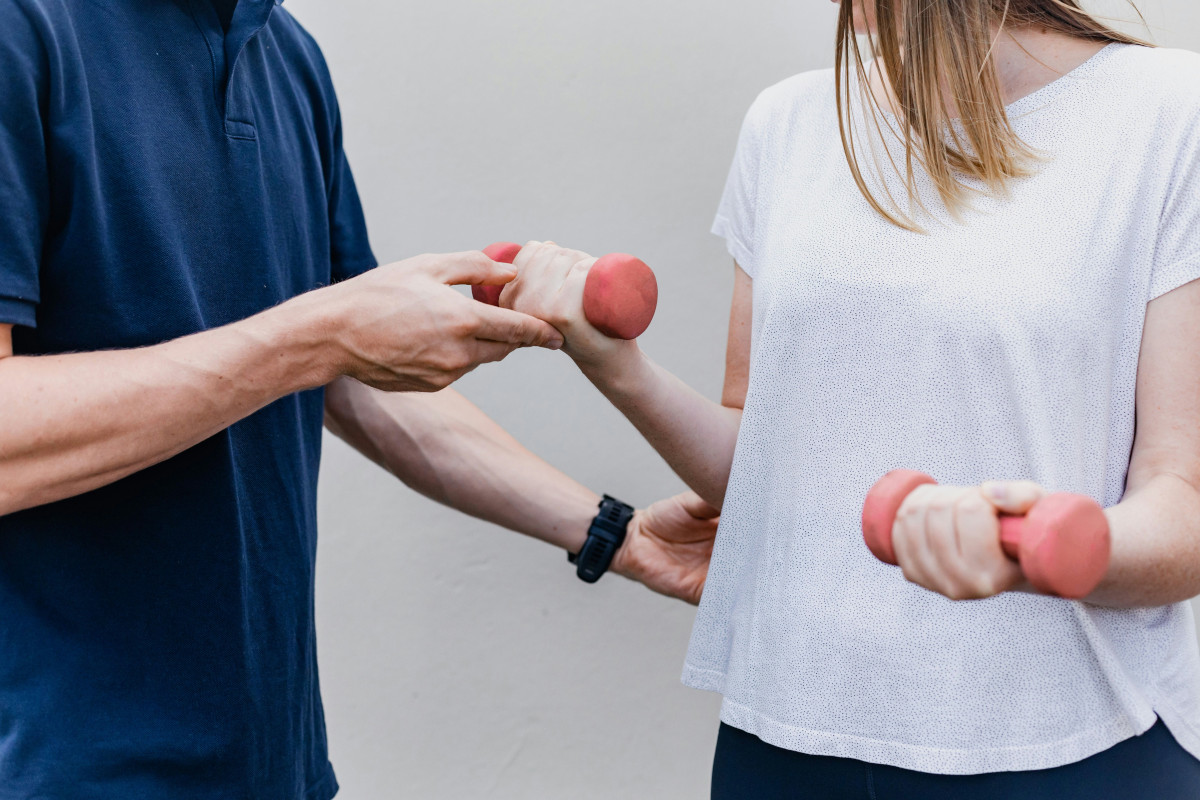
It’s now ten years since that awful period. I have had many other hospitalisations and, arguably, comparably terrible health problems: complete kidney failure and dialysis for life is hardly trivial. But this episode sticks with me for the acute terror of ICU, the word “stroke”, and all its implications. It took me quite some time to recover. I did so by forcing myself to walk around the park, a little further every day. My hearing has regenerated to some degree. And I eventually got back on an exercise bike. Those were the days. This was also the time when I think I realised that there is nothing “brave” about holding out until you are seriously ill to seek help. It is far more sensible to nip these things in the bud before they become catastrophic.
Anyway, this post came to me in a dream last night as I realised that it was the tenth anniversary of having a stroke.